I have this friend who I always think about whenever I see a t-shirt with a design that’s unique, cool, or just plain weird. More often than not, I don’t actually send them the shirt I saw because if I sent every little thing that reminded me of the people I love and care about, they’d probably stop talking to me (as it’s a lot). But for whatever reason, I did send them this one.
The design was this weird, frog-like creature, and it said “Hi, how are you?”. There was some other text too, but I didn’t really pay attention to it at first. What caught my eye was that it was embroidered, and I love anything with a textured design like embroidery, patches, buttons… anything that has that slightly 3D feel.
Later, I took another look at the picture and finally noticed the rest of the text. I Googled it out of curiosity. And wow, was I right to.

Turns out, the design was by an artist named Daniel Johnston – and if you’ve never heard of him, buckle up because his story is wild.
The sound of imperfection
Daniel Johnston was never famous in the way pop stars are famous, but his influence runs deep. His music, recorded on lo-fi cassette tapes in the ’80s, was raw, unpolished, and unfiltered. His songs weren’t technically perfect, his voice wavered, his melodies were simple, but that’s exactly what made them hit so hard.
He started off recording songs in his parents’ basement with nothing but a cheap tape recorder and an unstoppable imagination. Albums like Hi, How Are You and Yip/Jump Music sound less like studio recordings and more like pages ripped straight from someone’s journal. They’re messy, heartbreaking, hopeful, and painfully real.
At some point, Kurt Cobain discovered his music and started wearing a Hi, How Are You t-shirt (the same one I mentioned at the beginning), which instantly made Johnston a legend in underground music circles. Tons of artists have covered his songs over the years.
But as much as people connected with his music, his struggles with mental illness were just as much a part of his story.
A mind caught between genius and madness
Daniel Johnston wasn’t just eccentric – he battled severe schizophrenia and bipolar disorder. His life swung between moments of brilliance and terrifying lows, between making beautiful music and being hospitalized for his mental health.
His songs often feel like desperate letters to the universe – pleas for love, understanding, or just some kind of connection. Tracks like Some Things Last a Long Time and True Love Will Find You in the End aren’t just songs; they feel like someone pouring their heart out to you in the middle of the night. They’re not perfect, and that’s exactly why they’re perfect. They sound human.
His art was no different. He filled notebooks with sketches of frogs, eyeball monsters, and superheroes. His drawings often felt like glimpses into a world where good and evil were constantly at war, a battle that reflected his own inner struggles.
And this brings me to one of the best ways to truly understand Daniel Johnston: the documentary “The Devil and Daniel Johnston.”
“The Devil and Daniel Johnston”
If you want to get a sense of who Daniel Johnston was, you need to watch The Devil and Daniel Johnston (2005). It’s an incredibly intimate, heartbreaking, and beautiful look into his life, his talent, his struggles, his highs, and his devastating lows.
The film pieces together home videos, interviews, and recordings that show just how much of a creative force he was, but also how deeply his mental illness affected him.

One of the most haunting moments is when it talks about the time he refused to take his medication, believing that the devil was trying to stop him from creating art. He even had an incident where he took the keys from a plane his father was flying and threw them out the window, causing them to crash-land. His father, thankfully, managed to land the plane safely, but it’s one of those stories that really highlights the chaos that mental illness brought into his life.
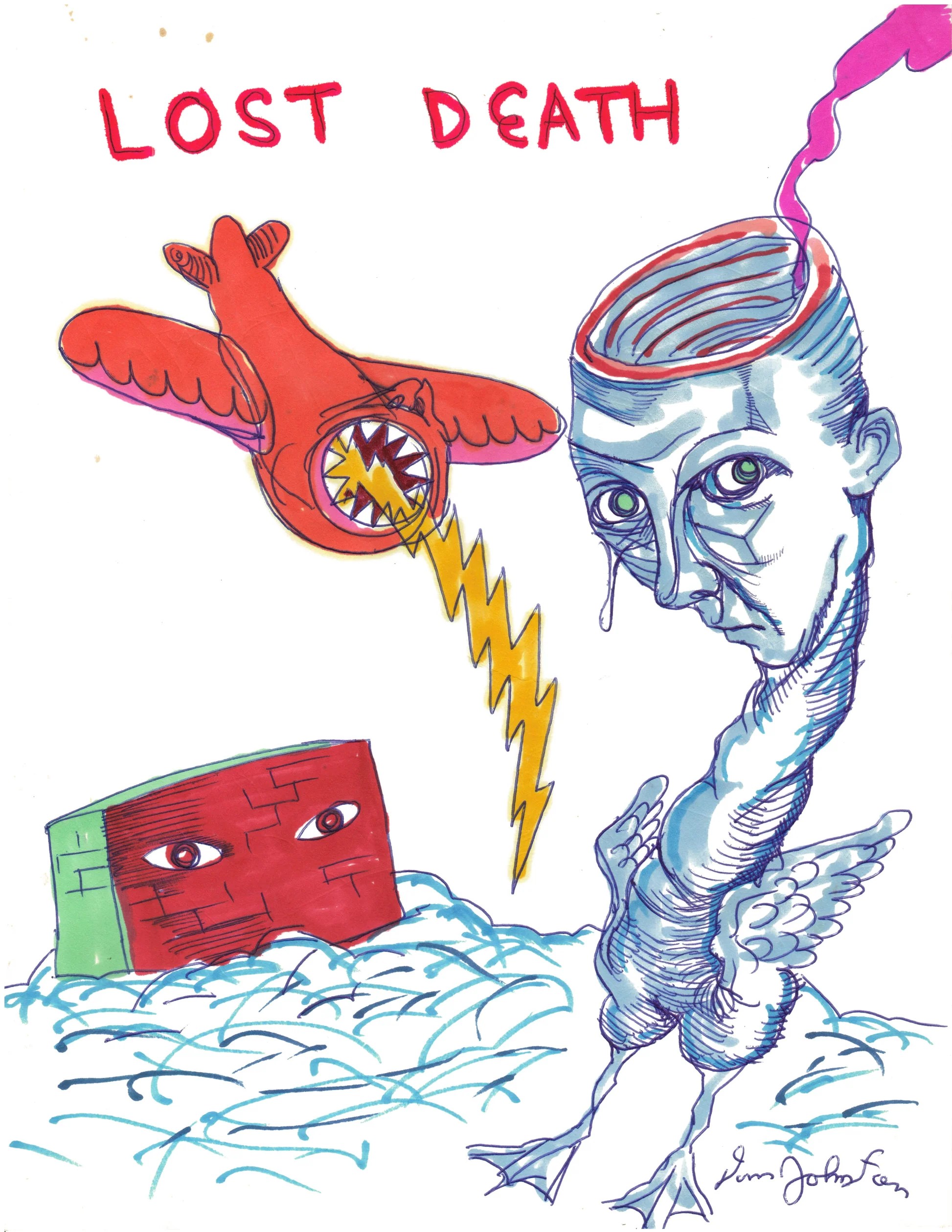
The documentary doesn’t sugarcoat anything. It shows the ugly parts of his struggles, the heartbreaking parts, but also the sheer magic of his music and art. It’s the kind of film that sticks with you long after you’ve watched it.
The Frog on the Wall
In 1983, Daniel Johnston painted a wide-eyed frog on a record store wall in Austin, Texas, with the words “Hi, How Are You.” What seemed like a simple doodle became an icon.
The frog, Jeremiah the Innocent, stares blankly, almost questioning. The phrase feels both friendly and haunting, a quiet check-in, a plea for connection.
The mural nearly vanished in 2004, but Austin fought to keep it. Today, it stands as a symbol of outsider art, mental health awareness, and Johnston’s raw, unfiltered creativity. Even after his passing, his frog still asks, “Hi, how are you?”

The art that lives on
Daniel Johnston passed away in 2019, but his music and art still resonate. He left behind a body of work that proves you don’t have to be perfect to make something meaningful, you just have to be honest.
Which is why I found it so important and powerful.
In a world where everything feels overproduced and curated, Daniel Johnston’s raw, unfiltered creativity feels like a breath of fresh air. His music was for the misfits, the dreamers, the people who always felt like they were on the outside looking in. And maybe that’s why it endures, because deep down, don’t we all feel like that sometimes?
So, if you haven’t already, put on a Daniel Johnston song. Close your eyes. Let yourself step into his world.
It’s beautiful. It’s messy. It’s unforgettable.
And maybe, just maybe, true love will find you in the end.
Some of my favorite lyrics from Daniel’s songs:
The Sun Shines Down on Me
“I’m walking down that empty road
But it ain’t empty now
Because I’m on it
And I’m getting closer to a hope
That I can carry and take home with me
When the sun shines down on me
I feel like I have to earn it
When the sun shines down“
And some on his drawings:


More info on music, art and Daniel in general can be found @
Daniel’s Spotify
Daniel’s Instagram
Daniel’s website
Leave a Reply